Daily Training Guide
Illustrative BJJ Camp Day: What to Confirm
Review an illustrative BJJ camp day, then obtain the actual times, sessions, disciplines, coaches, meals, rest, and facility access in writing.
Commercial planning guide. This site is not live inventory, a date-specific timetable, or a written offer. Confirm operational and commercial details before payment or travel.
Quick answer
The published day is an illustration only; 10:00-12:00 and 20:00-21:30 are not confirmed session times.
No meal, session, discipline, coach, partner level, intensity, activity, or rest block is promised until the date-specific timetable and offer confirm it.
Morning example
10:00-12:00; not confirmed
Evening example
20:00-21:30; not confirmed
Possible categories
BJJ primary; extras require confirmation
Contract source
Written timetable for your dates
Sample BJJ camp day in Tbilisi
The day below is editorial planning content, not a rigid or typical schedule.
Breakfast is the only included meal with Bed & Breakfast. Lunch and dinner are self-arranged; the training and rest times shown here are examples only.
Obtain the current written timetable and decide with appropriate professional advice whether its volume and recovery fit you.
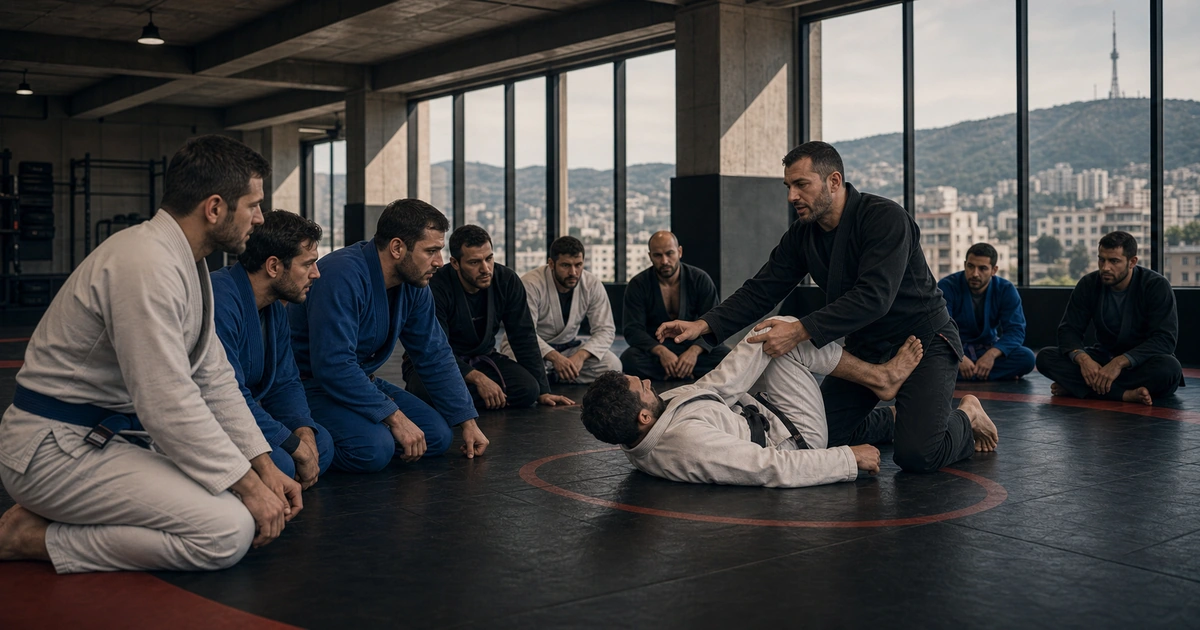
Morning technical training
A morning technical block is one possible format, not a promised session.
Ask whether the confirmed block contains instruction, drilling, positional work, live rounds, or another format.
Do not infer room pace, coach access, or question time from this editorial example.
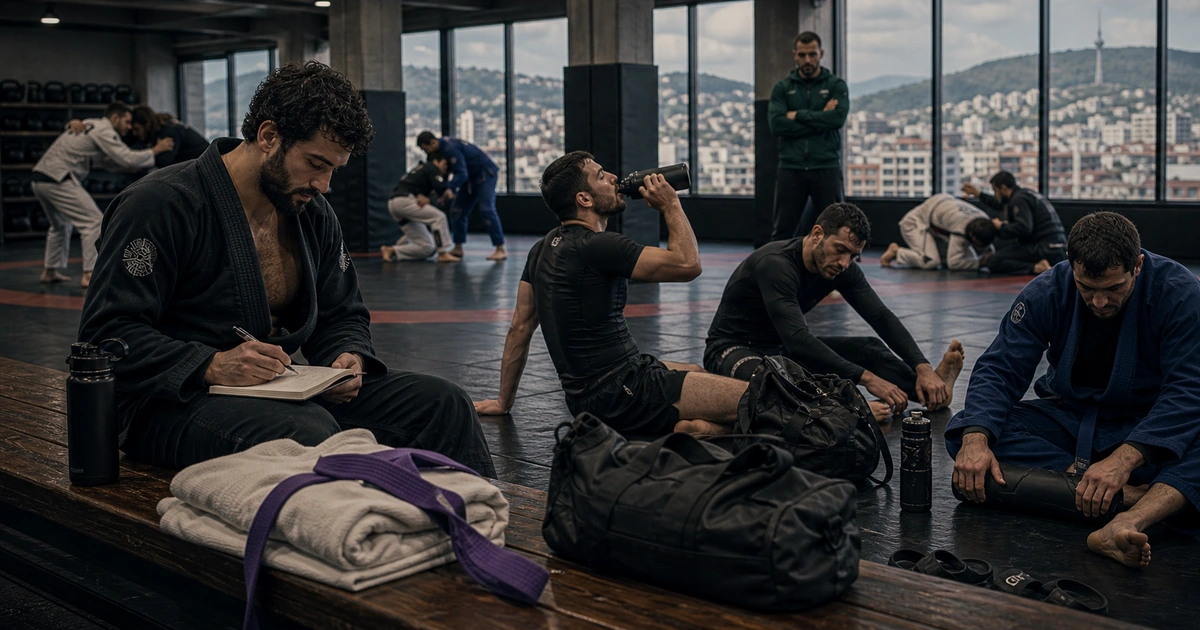
Midday food, rest, and recovery
A midday gap, meal, or hotel recovery window is not guaranteed by this example.
Confirm meal timing, hotel location, room access, transport, and the gap between any scheduled sessions.
If you want a productive week, protect sleep, hydration, and downtime between sessions instead of treating the break like empty space.
Optional sessions without overtraining
Extra work can be useful when it supports your goal: mobility, light drilling, video review, or focused conditioning.
It becomes a problem when every optional block turns into another hard sparring session.
If you arrive with a minor injury, long travel fatigue, or a competition date close by, tell the team before you push the volume.
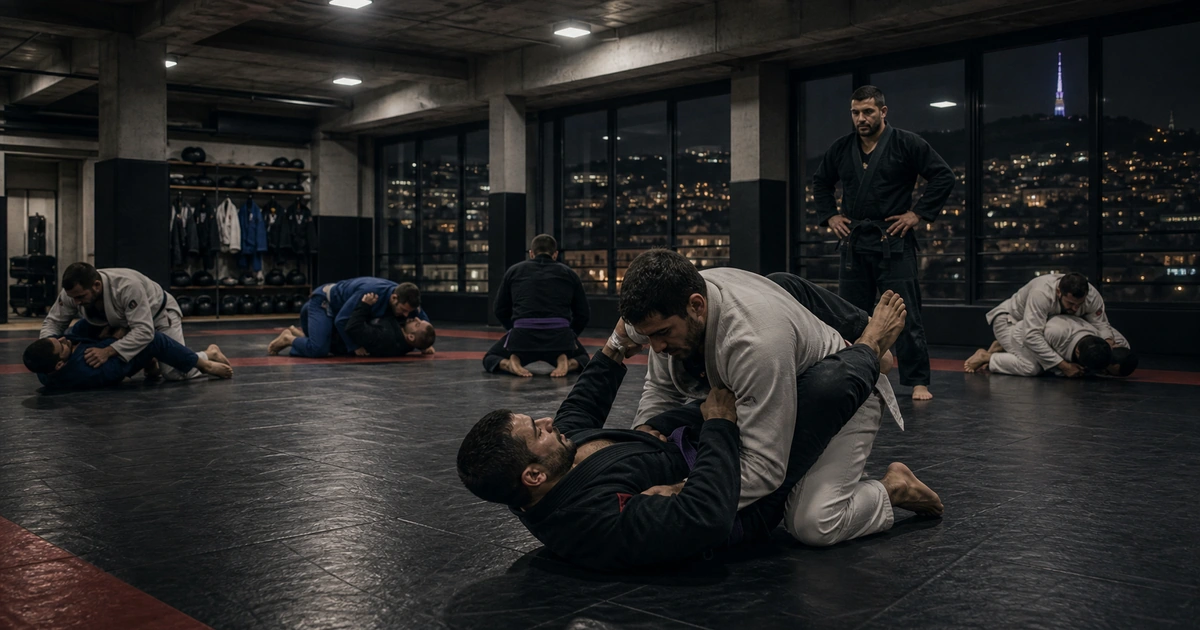
Evening grappling and cross-training
An evening block or cross-training discipline is not guaranteed.
No-Gi, judo, wrestling, positional rounds, conditioning, and review are possible planning categories only.
Ask which category, coach, intensity, and partner group are actually scheduled for your dates.

How the schedule changes by level
No separate beginner, intermediate, or competitor group is promised by this page.
Share level, age, training history, injuries, goals, and recent activity, then obtain written confirmation of group and partner fit.
Competitors should ask what partner level, sparring volume, and wrestling or judo exposure are expected for their dates.
Sources and claim scope
Sources support only the scope stated below. First-party planning pages are not independent proof of availability, attendance, package delivery, or outcomes.
- BJJ Camp Georgia program planning page
First-party planning categories only; the date-specific timetable, disciplines, coaches, intensity, and access require written confirmation.
- BJJ Camp Georgia listed inquiry dates
First-party planning cadence only; listed dates are not live inventory or confirmed availability.
Related Guides
Ready to train BJJ in Georgia?
Review the published 7-day or 14-day planning options, then send your level, room preference, and requested dates. Do not pay or book flights until one current written offer confirms availability, timetable, package scope, total price, payment, and cancellation terms.
BJJ Camp FAQ
How many sessions are there per day?
No fixed count is promised. Obtain the date-specific timetable, disciplines, coaches, intensity, and rest plan in writing.
Is every session hard sparring?
The article cannot establish any session format or intensity. Ask for the current plan and discuss health or injury constraints before participating.
Can the schedule change?
Yes. Rely only on the latest written timetable for your dates, and ask how changes will be communicated.